After about a year and a half of working with collodion positives, I wanted to move on – to work with my own negatives.
The advantage of a negative, as most of us probably know, is the possibility of its reuse.
A film negative is used in a darkroom to produce photographs on photographic paper or other light-sensitive materials. The same is true for a collodion negative.
The use is similar, with the only difference being that the glass negative is mostly used for so-called 1:1 contact printing, see Wikipedia.
One of my milestones in learning about the negative collodion process was meeting a professional Slovenian photographer named Borut Peterlin. His official website is borutpeterlin.com, but he is much more active on his blog, who has been writing for about ten years.
Borut studied photography at FAMU in Prague, and thanks to that, we are much closer to each other as "foreigners".
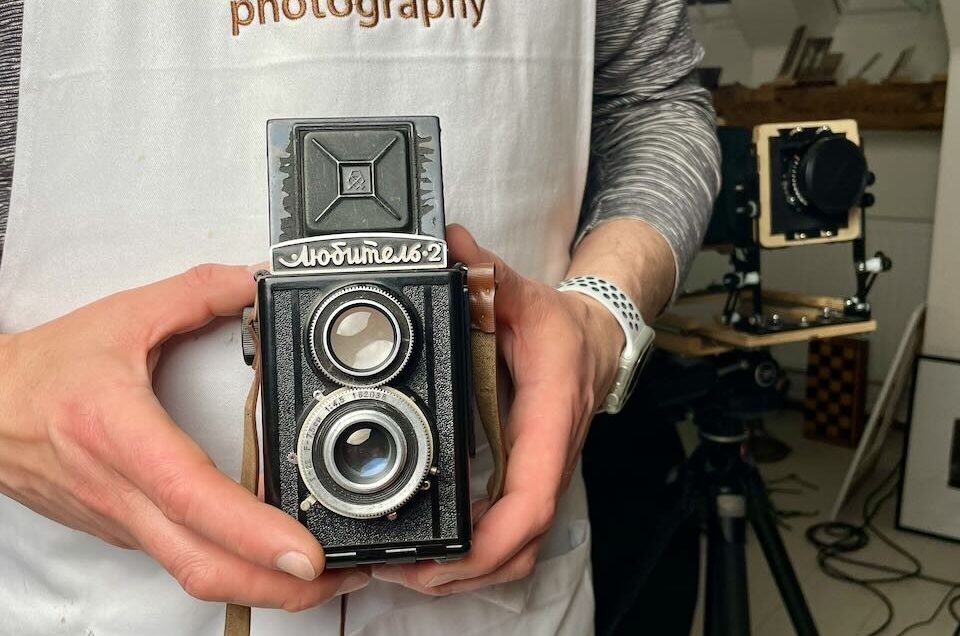
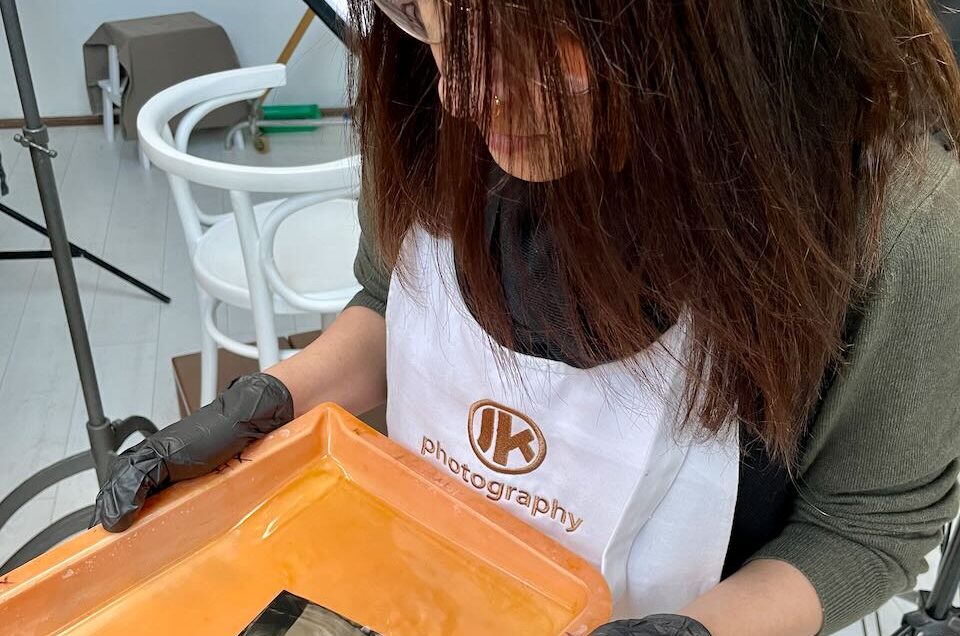
Last summer I went to Slovenia to take a private workshop on making collodion negatives with Borut.
Borut, who personally participated in several workshops in the USA in George Eastman House in Rochester is one of the most passionate professional photographers in Europe that I have ever met. Photography is his life. His workshop was a spontaneous and right choice for me.
Over the course of two days, he gave me the maximum amount of information he had acquired at George Eastman House, helping me to more easily understand the basic creative elements for my future work.
Borut's work is extremely inspiring and interesting to me.
I will definitely publish a separate article on my blog about this artist, with whom I have been friends for a long time.
—
After about a year and a half of working with collodion positives I wanted to go further – to work with my own collodion negatives.
The advantage of negative, as a lot of people know, is a possibility to use it for contact prints and other purposes.
Film negatives can be used in a darkroom to print photos on photo paper or other light-sensitive materials and with collodion negatives the use is almost the same.
Usage is similar with the only difference that the glass negatives are usually used for the so-called contact printing 1:1, see Wikipedia.
One of the milestones in my learning process of collodion negatives was my connection to a professional photographer Borut Peterlin. His official website is borutpeterlin.com, but much more active is his blog, which has been written by Borut for more than ten years.
Borut studied at FAMU in Prague and thanks to that fact we are much closer to each other.
Borut, who personally attended several workshops in the USA in George Eastman House, Rochester is one of Europe's most enthusiastic among professional photographers. To choose his workshop was for met the right choice. He gave me within two days maximum information he had got in the George Eastman House and helped me to more easily understand the basic elements for my future work.
Borut's work is for me extremely inspiring and interesting.
I will write on my blog an extra article about my friend Slovenian artist Borut Peterlin.
—
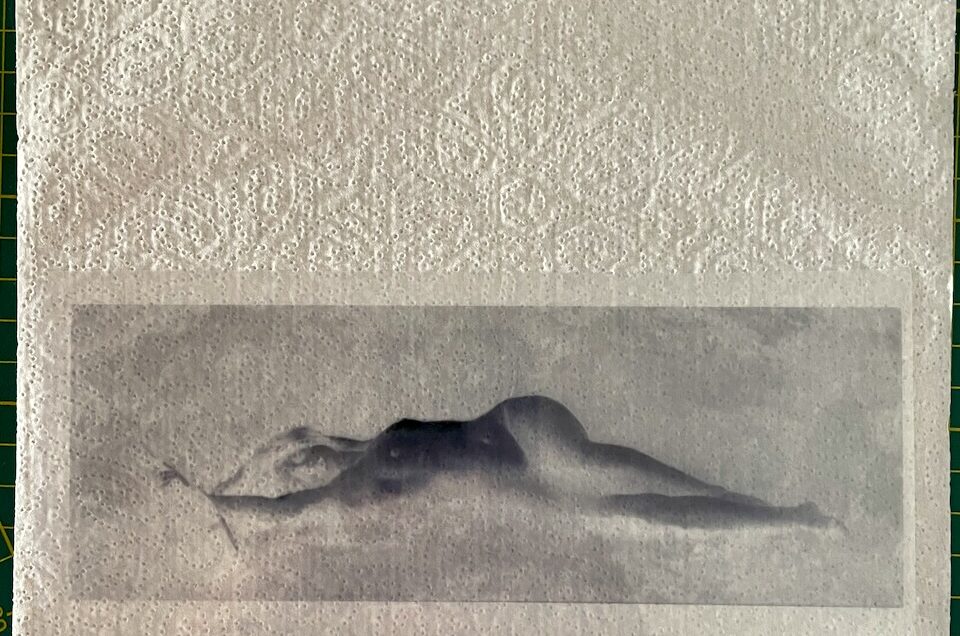
Our test salt print from our collodion negative. Summer 2013, Slovenia
—
Our test salt print from the collodion negative. Summer 2013, Slovenia

You might also like