
Welcome to my blog, where we will explore the world of collodion POP photography together. Today I will share my experiences in creating and editing negatives, which are the basis for this unique photographic process.
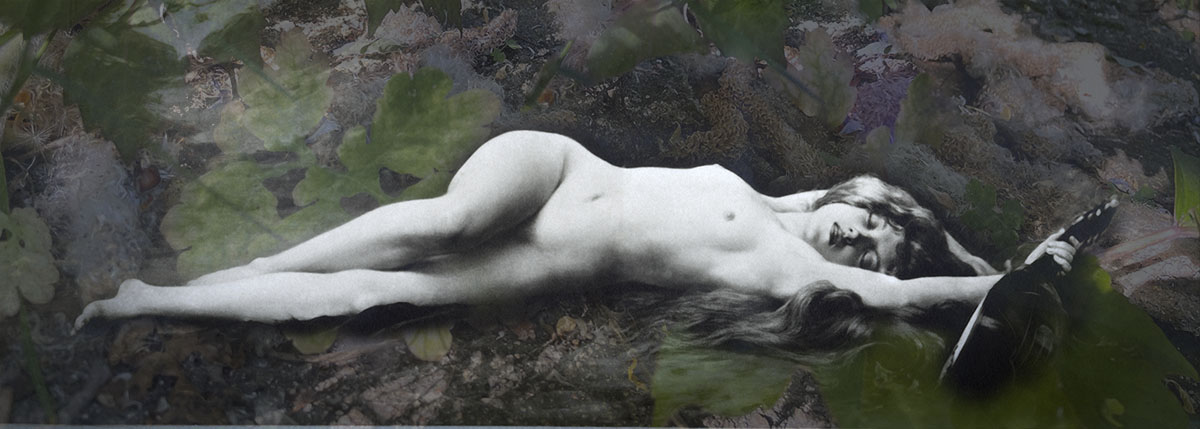
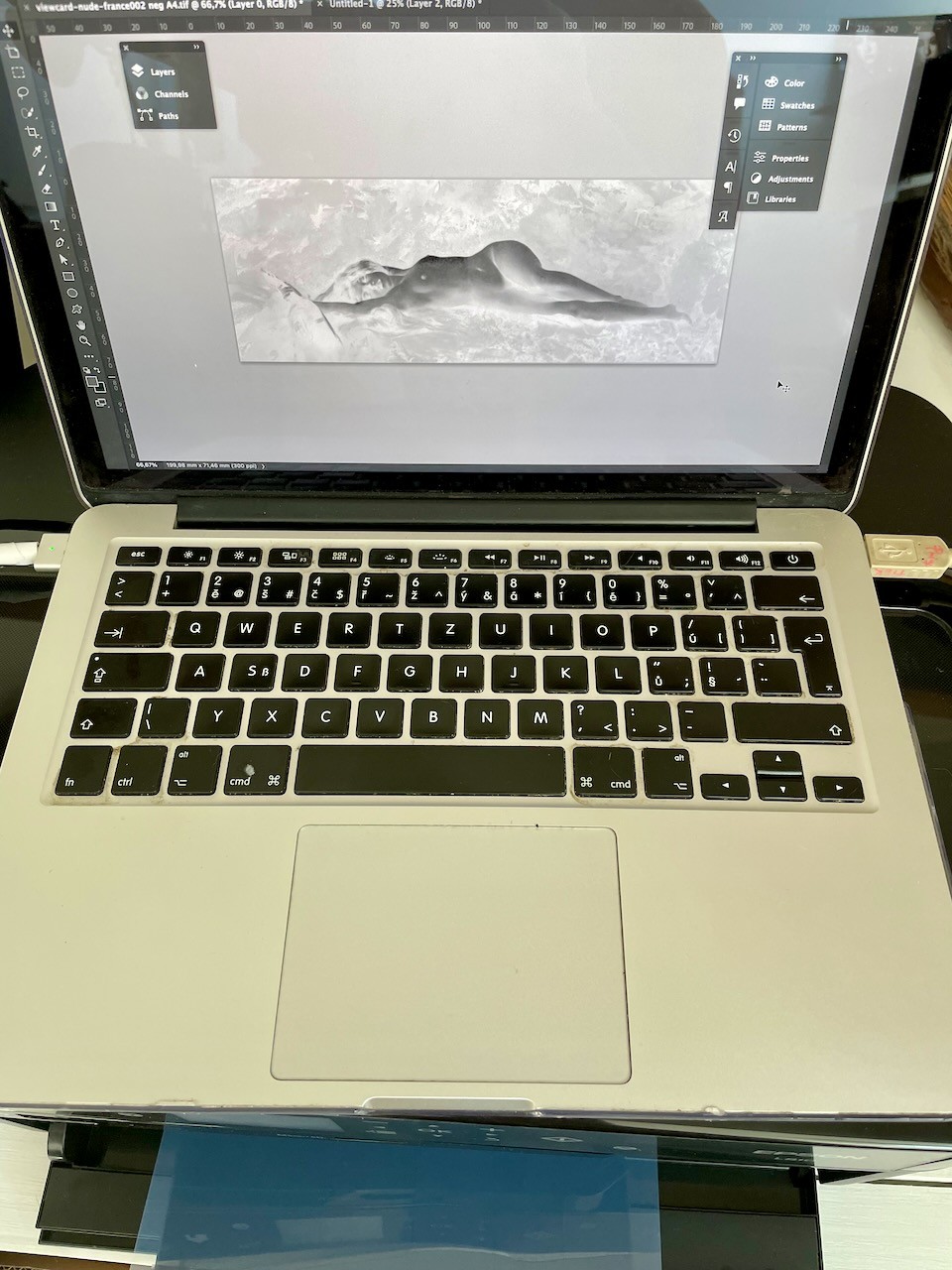
This Saturday I spent an intense effort creating and editing negatives for POP collodion photography. I decided to explore this historic process, which relies on one of the most durable silver-based techniques. The process is called direct copying or Printing-out-paper (POP).
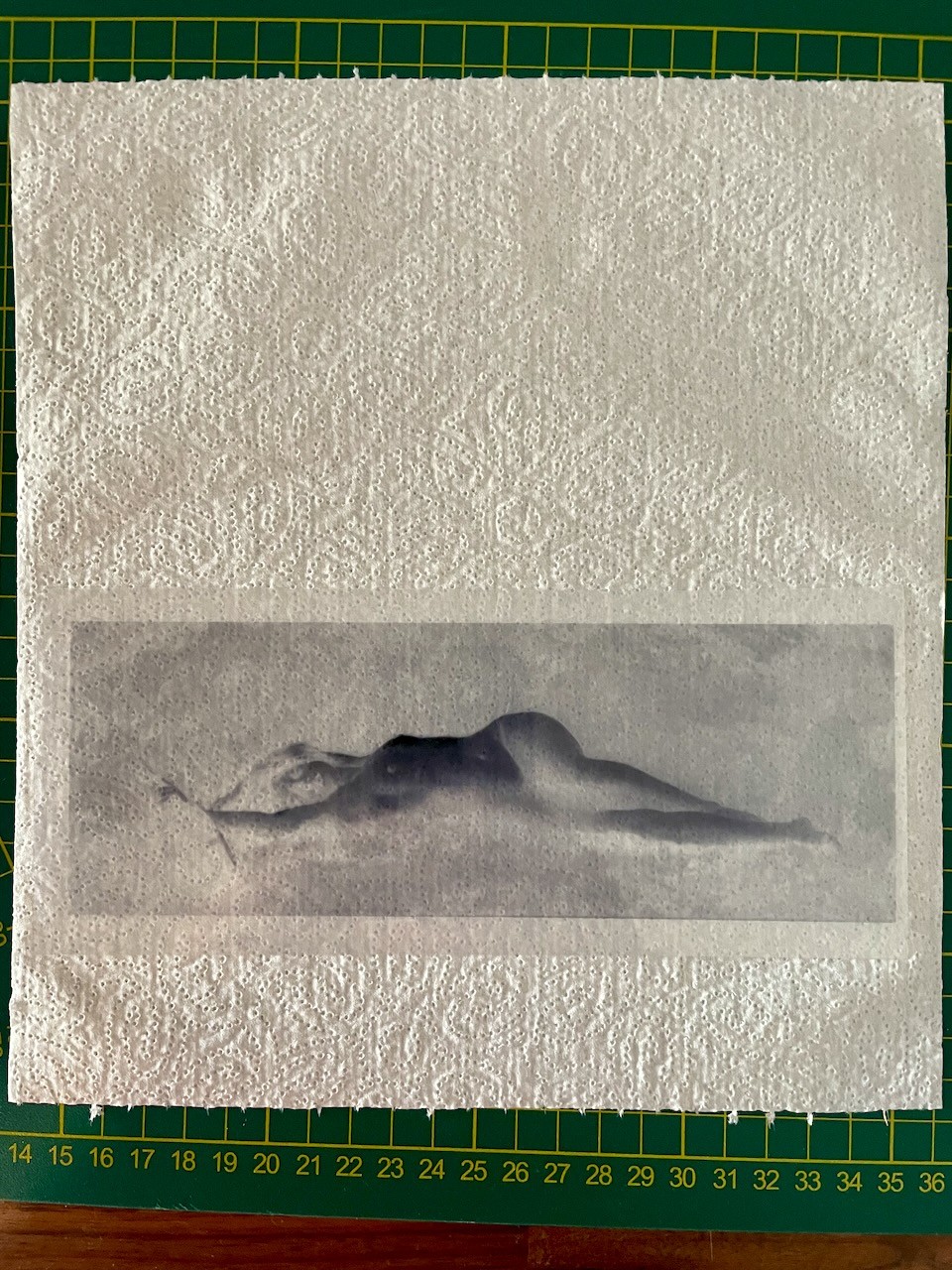
For my test composition, I was inspired by an old postcard from 1903. I had to scan the photo in high resolution and then carefully edit it to get a suitable digital negative. In order to create an interesting composition, I used the environment of our garden and added a shot of the plants to the scene with a reclining model with a string instrument.
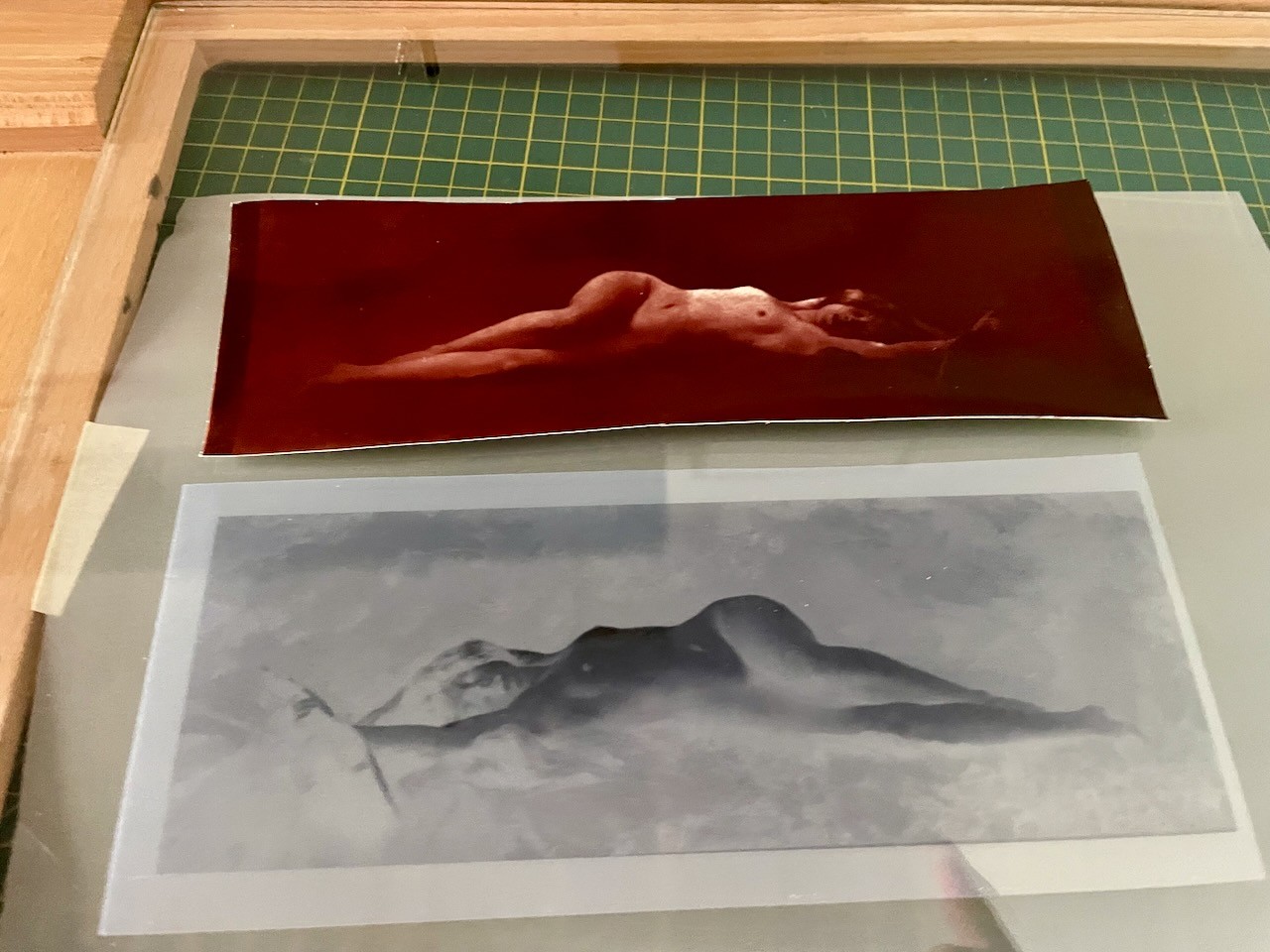
After making several negatives and prints, I started analyzing the results. The third negative I will make will be closer to my idea. There are still some small details to be adjusted, but I believe that the photograph will be really interesting for a POP collodion print.
Collodion POP printing impressed me with its durability and longevity. Unlike other silver-based photographic processes, the photo does not fade and the surface is reliably protected by a layer of collodion. This process brings a unique connection between the past and the present, and I am already looking forward to more photos in this fascinating style.
If you would also like to delve into the world of collodion POP photography and are looking for a portrait or other photography in this style, do not hesitate to contact me. I am proficient in both analog and digital, and preparing a high-quality digital negative is a priority for me.
Join me on this unforgettable journey into the past and let's discover together the magic of collodion POP photography.
Health Honza Kratochvil

You might also like


