If you look at people's faces in old photographs, you usually get the impression of a gloomy, rigid or fixed expression. Is that so? Yes, photographs taken in the 19th and early 20th centuries required a certain concentration. I don't think people were any sadder than they are today. If I focus on the expression in a portrait, this fact must be taken into account: A photograph created using procedures that we now call historical techniques was undoubtedly much more demanding for the subjects and no less so for the photographer. What was the difficulty? I will stick with the wet collodion process, which I have been intensively involved in for about 4 years, and I will try to describe my perspective, my experience. (Note: A basic description of what the collodion process is is also on my website collodium.cz or here or more detailed information at Wikipedia.)
So what influenced the expression of the portrait subjects?
- Photography was not a common daily occurrence, and people (probably the vast majority) were individually aware of this during the photo shoot.
- Note. It is common knowledge that people used to own only a few photos from their childhood. Sometimes, unfortunately, none. Until the boom in photography, thanks to industrial film production, made the freedom of photography available to almost everyone. Of course, at the beginning there was again a financial barrier that prevented all enthusiasts and amateur photographers from experimenting more with photography. Photographic services were not cheap. Not everyone could afford them.
- Studio/exterior environment; new, unfamiliar unfamiliar environment.
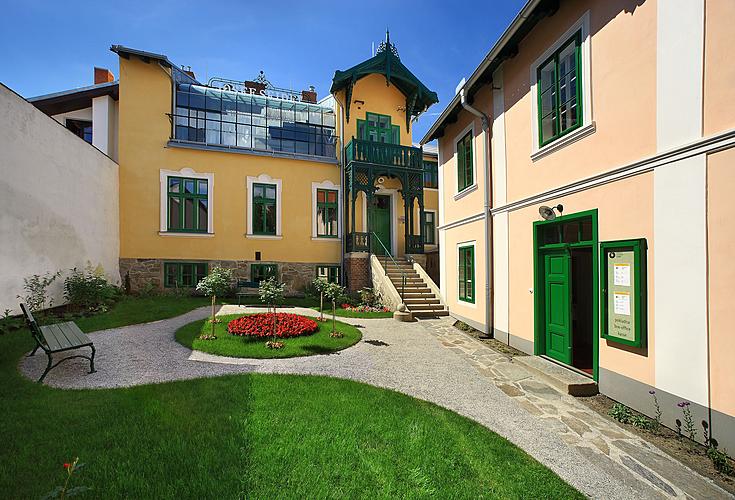
- Exposure times for collodion photography were subject to natural lighting conditions indoors or outdoors. Exposures in glass studios, such as the studio Seidel in Český Krumlov they were in the order of seconds. The exposure times were sometimes half a minute or longer.
- Preparation by the photographer
- A photographer who prepared for a collodion photo shoot in his studio had it much easier because he knew his environment. He also did not have to deal with the problem of changing weather, whether it was raining or windy and similar situations. Equally important was the cleanliness of the studio environment, which provided much better conditions for taking technically high-quality photographs.
- The portrait compositions had to be carefully prepared before the actual exposure. One of the reasons for taking photos on collodion is that after removing the wet plate from the sensitizer (silver bath), the photographer had only a few minutes to take the picture, immediately develop it, and then stabilize the image.
- Human nervousness, fear of failure – ruining the picture.
- Preparing the portrait of the person being portrayed
- Clothing, stylish accessories, and often even small details were controlled to make the result as impressive as possible.
All of the above-mentioned facts influenced the expressions and poses of the people portrayed. Let's not forget, of course, human subjective feelings and moods (joy, sadness), the character of the person... 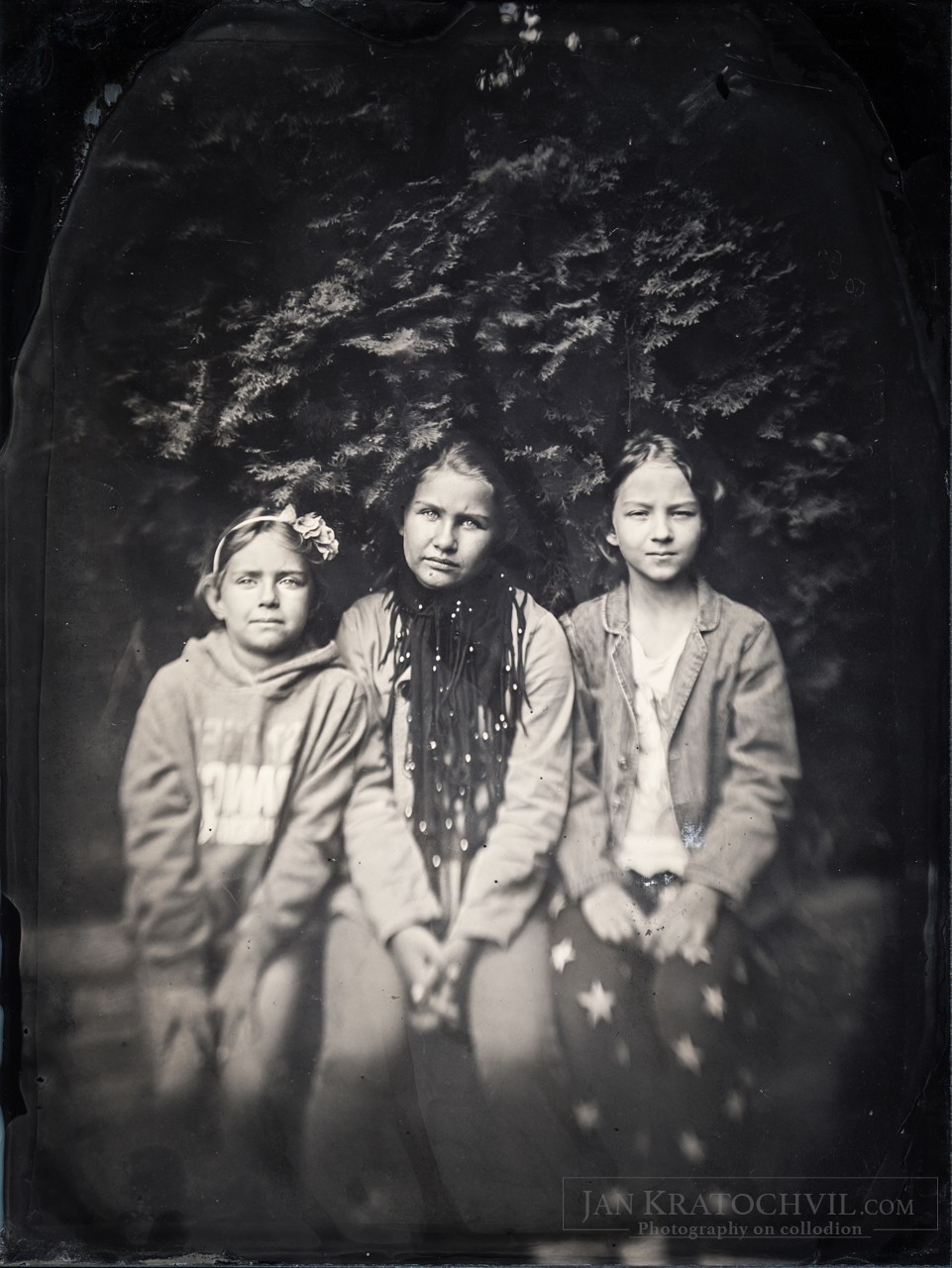
Information about the portrait of children on collodion in this post:
Technique: Eastman Kodak 2D, 8×10″, 260mm
Ambrotype 18x24cm, clear glass: aperture 4, time: about 4 seconds
Scan resolution: 93 Mpx
Date of photo shoot: 3. 10.2015
The concentration of the girl with the headband, the certain dedication of her sister in the middle, and the already certain experienced readiness of my daughter Olivia – these are the words I would use to describe my personal feelings that I perceive from the expression on these children's faces. They will certainly handle the next portrait at least as well as the first photoshoot.
Below is a mobile phone photo that shows the joy after the first successful photo shoot using the wet collodion process.
Joy after successful #colodion #wetplate portrait making #kolodium Joy and relaxation after a successfully mastered collodion portrait. — The faces of the models on the glass plate show that they tried their best. I will share the final copy of the glass photo after it is digitized. A photo posted by Jan Kratochvil (@jankratochvil_com),


You might also like